



26/12/2025 16:48
26/12/2025 16:48
26/12/2025 16:48
26/12/2025 16:48
26/12/2025 16:48
26/12/2025 16:47
26/12/2025 16:47
26/12/2025 16:47
26/12/2025 16:26
26/12/2025 16:26
» D24ar
Fecha: 26/12/2025 15:11
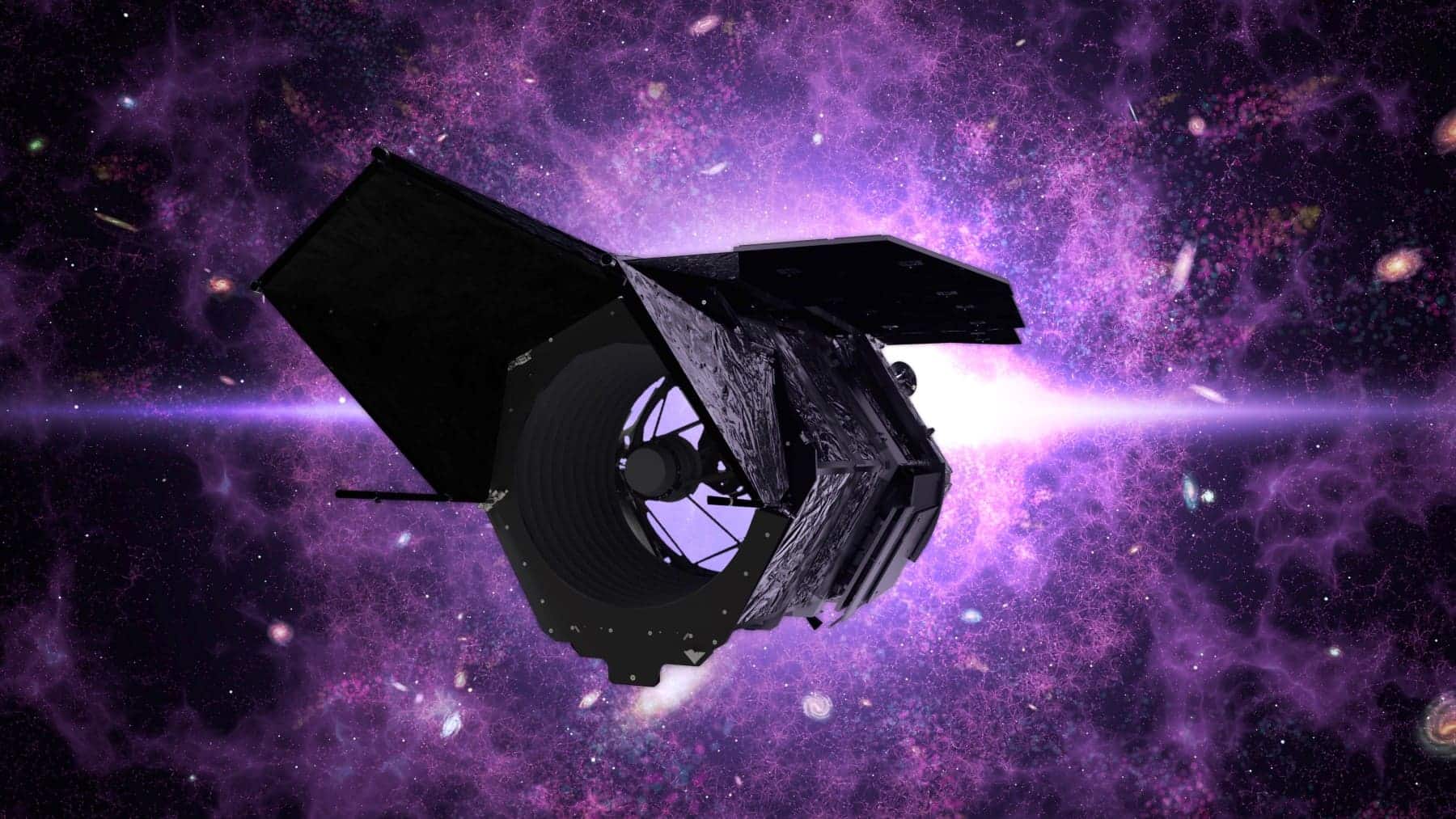
It is no news that humanity is making serious strides in revealing precise details that keep our universe running from the shadows. While the majority might behave more flippantly towards this salient possibility, international space agencies like NASA take the drive to a whole new level. The organization is set to unveil the universes tapestry, with a groundbreaking, multi-complex instrument, revealing the other end of the stick poised at humanity. Discovering the gravitational sweet spots where Lagrange points open doors to space There are five specific regions, known as Lagrange points, in the SunEarth system where the gravitational attraction of the Sun and Earth and the movement of a small object orbiting them are in balance. A spacecraft can remain stationary at these regions with no or only minuscule corrections from its onboard fuel, while being at stable positions between the two bodies. This is very useful for observation or communication. NASAs Lagrange mission makes a point of conserving space once they launch because it provides more time for space observation, maintains instrument stability, and prevents distortion of the cosmic view. This will untether NASAs Lagrange mission from conserving energy and resources while obtaining the best view of the universe. Why these parking zones matter for space missions A Lagrange point functions as a parking spot in space. Various spacecraft in low-Earth orbits experience shadows, drag from Earths atmosphere, constant propulsive maneuvers to remain in orbit, and ultimately incur limitations. The mission at a Lagrange point is able to dwell on stable observations of space for a much longer time. This costs less fuel, has less disturbance from the spacecraft itself. That is why NASAs Lagrange mission has chosen this spot: it provides the observatory with an exceptional quiet zone that reduces disturbances, allowing the observatory to record the universes tapestry as clearly and accurately as possible. Just like the God of Chaos mission. Exploring the universe with NASAs Lagrange mission and its cosmic observatory The NASA Lagrange mission will place a telescope or observatory at a Lagrange point, usually SunEarth L2, which is approximately 1.5 million km farther from Earth on the side away from the sun. From there, the spacecraft has stable conditions and a broad, unobstructed view of the universe. With this mission, NASA will map the cosmic tapestry of the universe with the aid of the Nancy Grace Roman Space Telescope: charting how galaxies are arranged, probing dark energy, searching for hidden exoplanets, observing ephemeral cosmic events, and providing a survey of the sky never experienced before. The goal is ambitious in that the telescope possesses a unique capacity to view the cosmos in incredible depth and liberty. What the universes tapestry could reveal and why it excites us From its Lagrange perspective, the NASA Lagrange mission could reveal incredible images. It may map out the cosmic web, revealing how galaxies and dark matter form filaments and voids across billions of light-years. By performing surveys on millions of galaxies, it could clarify why the universe is expanding faster and whether our theories of gravity hold. The mission will also be on the lookout for change, exoplanets that are hidden, supernovae, and rare or unexpected events. Often, some of the most exciting things discovered are surprises and challenge what we know today. This mission tells the story of the universe as a living, dynamic fabric. Hidden comets, mysterious trails, and interstellar exoplanets have become a regular day at the mystery office for us as a species, but the Nancy Grace Roman Space Telescope is about to revamp all knowledge about our preconceived ideology of the universe. Before now, astronomers were limited to documented information that many argue to be fictitious. The era of informed hypothesization and accurate cosmological research is upon us, just like this distant galaxys bizarre mark discovery, bending space-time.
Ver noticia original




.gif)








Examedia © 2024

Desarrollado por